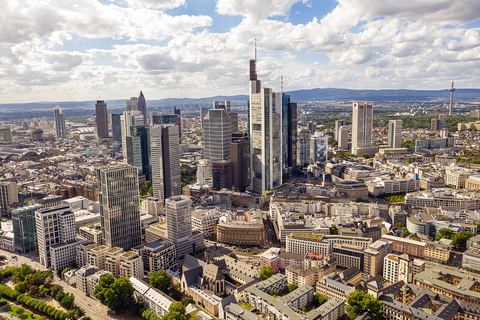
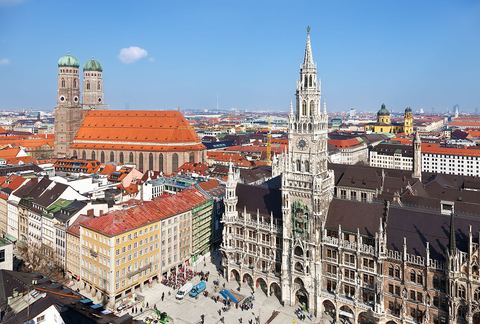
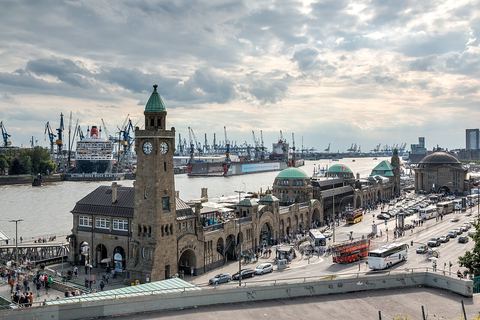
4 popular destinations across Germany — compare prices from 500+ airlines and OTAs, find the cheapest fares from any UK airport.
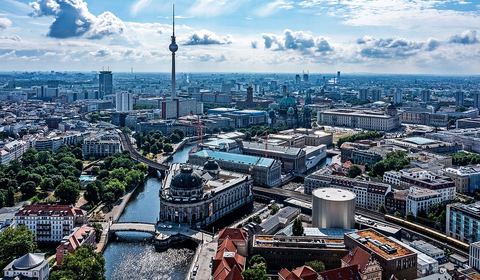
Germany is one of the densest UK short-haul markets. Every major UK airport has direct flights; London serves all six top cities daily. Frankfurt and Munich are the long-haul connection hubs (Lufthansa onwards to Asia, Africa and the Americas).
| Visa (UK passport) | No visa needed. Schengen — 90/180 days. |
|---|---|
| Currency | Euro (EUR, €). Card payment widespread but Germany retains a stronger cash culture than most of Western Europe — small bakeries, market stalls and family restaurants often prefer cash. |
| Time zone | CET (UTC+1) — one hour ahead. |
| Language | German (regional dialects in Bavaria, Saxony etc.). English fluent in all major cities and tourist areas; less so in rural Saxony or eastern small towns. |
| Plug type | Type C/F (European). EU adaptor needed. |
| Best months | May–September for outdoor cafés and gardens. December for Christmas markets (Nuremberg, Cologne, Berlin). January–February the cheapest fare months. |
| Flight times from UK | Berlin (BER) 1h 45m; Munich (MUC) 1h 55m; Frankfurt (FRA) 1h 35m; Hamburg (HAM) 1h 35m; Cologne (CGN) 1h 25m; Düsseldorf (DUS) 1h 25m |
London Heathrow with daily multi-airline service to Frankfurt, Munich and Düsseldorf. London Gatwick is heavier on Berlin and Hamburg via easyJet. Stansted runs Ryanair to Berlin, Cologne and Frankfurt-Hahn (HHN).
Flying is cheaper and quicker for Berlin. Eurostar+train via Brussels takes around 9 hours and rarely beats £150 one-way; a Stansted–Berlin Ryanair flight runs 1h 55m and routinely £30–£60 return.
Once ETIAS launches, yes — a pre-authorisation will be required before flying. The application is online (≈€7, valid 3 years). Until ETIAS is live, the 90/180-day Schengen visa-free rule applies.
January and February for cities; March on Munich (after ski season ends). Avoid Christmas markets (late November–22 December) when fares to Berlin, Cologne and Nuremberg can double.
Yes in most chain shops, restaurants and big cities, but with caveats: smaller German businesses often refuse contactless mobile and prefer card or cash. Always carry €30 in cash as backup.
Germany is one of the smoothest European destinations for UK travellers, with the practical caveat that cash is more dominant than most other Western European countries.